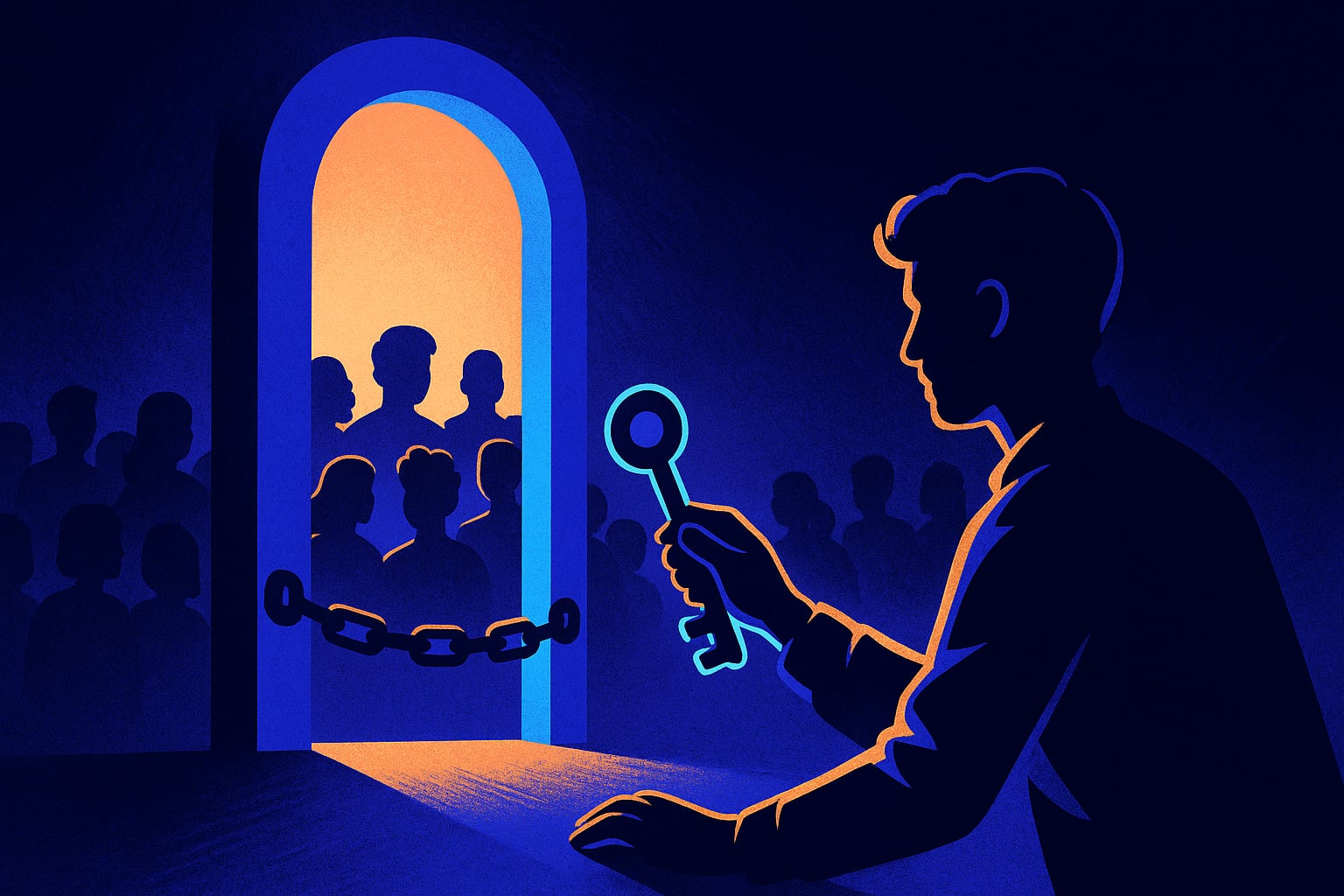
Completely open Discord servers attract the wrong crowd. One small join requirement, nothing extreme, filters out the ghosts and leaves you with people who actually want to be there.
The server was full. Nobody was home.
I had 380 members. On a good day, maybe 6 of them said anything. The rest just sat there, lurking, never interacting, never responding to events, never replying to announcements. I kept posting, kept organizing things, kept adding channels I thought people wanted. Nothing moved.
I blamed the content. I blamed the schedule. I blamed myself for not being online enough. Then I looked at the join log and noticed something: the average time between someone clicking the invite and completing onboarding was 11 seconds. Eleven. They were clicking a link from a retweet or a forum post, landing in the server, and not even reading the channel list before hitting that green checkmark.
Those weren't members. They were passers-by who forgot to leave.
The one thing I changed (and what it actually cost me)
I added a single question to the onboarding flow. Not a quiz, not an essay, not a verification gauntlet. Just: 'What brings you here?' with three options to pick from. That's it. The whole thing takes maybe 8 seconds to complete if you're paying attention.
In the first week, join numbers dropped by about 30%. I panicked for a day. Then I looked at who was actually staying. The people who answered the question were posting. Starting conversations. Responding to each other. The server felt smaller but it was finally alive. The 30% who bounced were never going to contribute anyway, they just weren't willing to spend 8 seconds proving it.
I'd built the server originally using BuildMyDiscord, which had set up the onboarding structure for me but left the friction level at zero because that's the safe default. Going back in and adding that one checkpoint was the smallest change I ever made to the server, and the most effective one. Quality over quantity is a cliche but the data here was not subtle.
The real insight wasn't about the question itself. It was about what zero friction signals to a new person: that this place doesn't care who shows up. A small barrier says the opposite. It says the people inside chose to be here, and you should too. That's the feeling that makes someone decide to post instead of lurk.
What the right amount of friction actually looks like
There's a version of this that goes too far. I've seen servers with a 400-word lore document you have to read before you can access any channel, a 10-question quiz, and a 24-hour manual approval wait. Those servers are performing exclusivity more than they're building community. The people who get through often leave within a week anyway because the server couldn't possibly live up to that level of gatekeeping.
The sweet spot is friction that takes under 30 seconds and requires one genuine decision. A topic selection, a single question, a role pickup that tells you something about why someone is here. Enough to wake people up and make them feel like they chose this place. Not enough to exhaust them before they've said hello.
If your server has over 100 members and fewer than 10 are talking on an average day, the problem almost certainly isn't your content or your bots or your channel layout. It's that the people inside never felt invested enough to start. Fix the door, not the furniture.
Frequently Asked Questions
Short term, yes, slightly. You'll see fewer joins per week. But the people who do join are far more likely to post, stay, and invite others who are actually interested. Dead member counts look good in a dashboard and nowhere else.
A role selection screen in Discord's built-in onboarding is the easiest starting point. Ask one meaningful question, like what topic they're there for, and make it required before they can see the full server. Takes about 5 minutes to set up.
Check your join-to-post ratio. If more than 80% of your members have never typed a single message, you have a friction problem, not a content problem. Content problems look different: people join and engage briefly, then fall off.
Yes. BuildMyDiscord, for example, sets up your onboarding structure automatically, though the default is intentionally low-friction. You can go back in and adjust the join flow yourself once you know what kind of community filter you need.
Build yours in about 3 minutes
Stop wiring up channels by hand. Describe it, and it builds itself.
Tell the AI what your community is for and get a full Discord server back, channels, roles, permissions and a management bot, ready before your coffee is.
Build my server freeRelated articles
I copied my Discord server's activity by faking it for three days. My real members never noticed. Then they did.
I seeded fake activity in my Discord server to kick-start conversations. It worked, then collapsed. Here's the exact moment it turned.
I gave my Discord server a 'dead hours' problem and fixed it by accident with one stupid small change
My Discord was active for 2 hours a day and silent for 22. I tried everything obvious. The fix was embarrassingly simple.
I made my Discord server's bot respond to everything. My members stopped talking to each other completely.
I automated every interaction in my Discord server and watched real conversation die in two weeks. Here's exactly what happened.