Giving server access to a trusted friend without clear rules is one of the fastest ways to destroy months of community work. Here's what went wrong and what to do instead.
I thought handing over the keys was the safe option
I had a Discord server for my indie game project. About 340 members, decent daily activity, a setup I had spent probably 15 hours getting right. Then I went away for 10 days and did something I thought was responsible: I gave a close friend admin access so someone could handle problems while I was gone.
He was active on Discord. He cared about the server. I trusted him completely. I wrote him one message that said 'just keep an eye on things' and got on a plane.
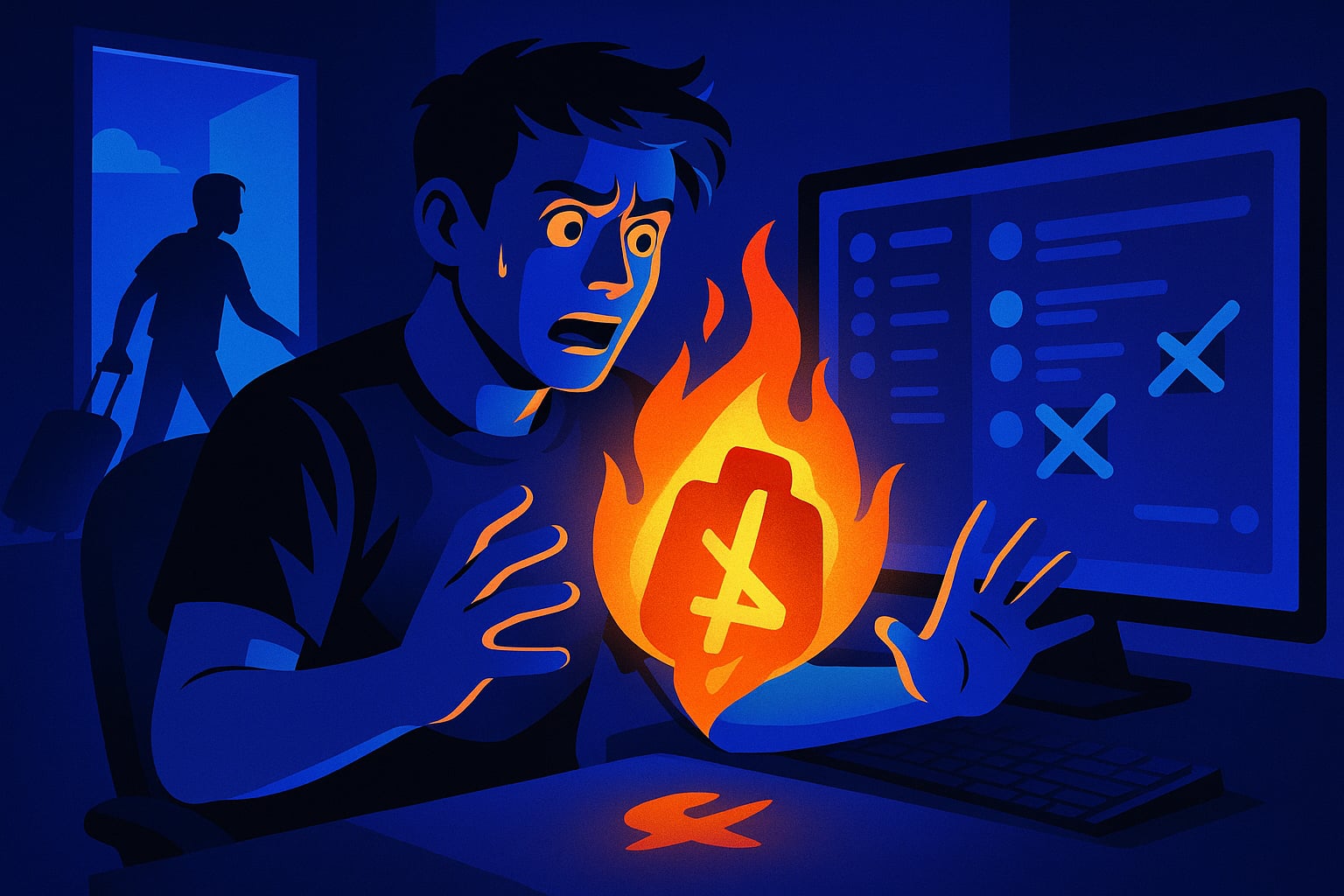
When I opened Discord 10 days later, the first thing I saw was a pinned message from him that said 'drama is over, moving on.' There were six channels missing, including the one where members shared their own game screenshots, which had been the most active channel for three weeks straight. There was a 200-message argument in #general that had collapsed into three separate friend groups who had stopped talking to each other. And he had promoted two people to a 'helper' role that I had never created and didn't understand.
The problem wasn't him. It was me.
Here's what I figured out when I went through the logs. A spammer had hit the server on day two. My friend handled it fine, banned the account, no issue. But then a member complained that the screenshot channel was 'full of self-promo' and my friend, genuinely trying to help, deleted the channel to stop the argument. The channel had 340 saved images in it. Gone.
He then created the 'helper' role to give two members tools to assist with moderation, but because I had never set up proper permission tiers, the helper role accidentally inherited some admin-level settings. One of them used those permissions to move members between roles as a joke. That's what started the civil war.
None of this was malicious. Every single decision he made came from good intentions and zero context. 'Keep an eye on things' is not a handover plan. It's a wishlist.
After rebuilding the server (with BuildMyDiscord doing the heavy lifting on restoring channel structure and permission layers), I set up two things I now consider non-negotiable. First, a document that lives in a private staff channel listing exactly what any mod or admin is allowed to do unilaterally versus what needs to wait for me. Delete a message: yes. Delete a channel: never without contacting me first. Create new roles: never without a written reason. Second, I set a rule that no channel can be deleted by anyone other than me, enforced at the permission level, not just by trust.
The irony is that the actual moderation, the banning and spam handling, worked fine without me. The damage came from structural decisions that felt small in the moment but weren't. A channel deletion is permanent. A role change ripples everywhere. Those are the things that need guardrails, not the day-to-day stuff.
What a real handover actually looks like
If you're leaving your server with someone else for more than 48 hours, you need three things. A clear list of what they can and cannot change (in writing, not in your head). Permission settings that make the dangerous actions physically impossible without your account. And a single contact method, even just a DM, where they can reach you before making anything structural.
The 'keep an eye on things' handover is how servers that took months to build get dismantled in an afternoon by someone who genuinely wanted to help. Lock down the structure. Let them handle people. Those are two completely different jobs.
My server recovered. Took about three weeks to rebuild the trust between the member groups that had fought. The screenshot channel never quite came back because the history was gone. That part still stings. But the lesson cost less than losing the whole thing, which is what would have happened if I'd been gone another week.
Frequently Asked Questions
Give them the ability to ban users, delete messages, and mute members. Do not give them the ability to delete channels, create or edit roles, or change server settings. Set those restrictions at the permission level so they're enforced automatically, not just by trust.
No. Once a channel is deleted, the messages and media inside it are gone permanently unless you had a third-party backup system running before the deletion happened. This is one of the most painful and common accidental losses in Discord server management.
Make sure that any temporary mod or admin role sits below your main admin role in the hierarchy. A role can only edit or assign roles that are below it in the list. Auditing your role order before handing over access takes two minutes and prevents most hierarchy accidents.
At minimum: what actions are allowed without contacting the owner, what actions require owner approval, how to reach the owner in an emergency, and a list of roles with a one-line description of what each one is for. It doesn't need to be long. It needs to exist.
Build yours in about 3 minutes
Stop wiring up channels by hand. Describe it, and it builds itself.
Tell the AI what your community is for and get a full Discord server back, channels, roles, permissions and a management bot, ready before your coffee is.
Build my server freeRelated articles
I copied my Discord server's activity by faking it for three days. My real members never noticed. Then they did.
I seeded fake activity in my Discord server to kick-start conversations. It worked, then collapsed. Here's the exact moment it turned.
I gave my Discord server a 'dead hours' problem and fixed it by accident with one stupid small change
My Discord was active for 2 hours a day and silent for 22. I tried everything obvious. The fix was embarrassingly simple.
I made my Discord server's bot respond to everything. My members stopped talking to each other completely.
I automated every interaction in my Discord server and watched real conversation die in two weeks. Here's exactly what happened.