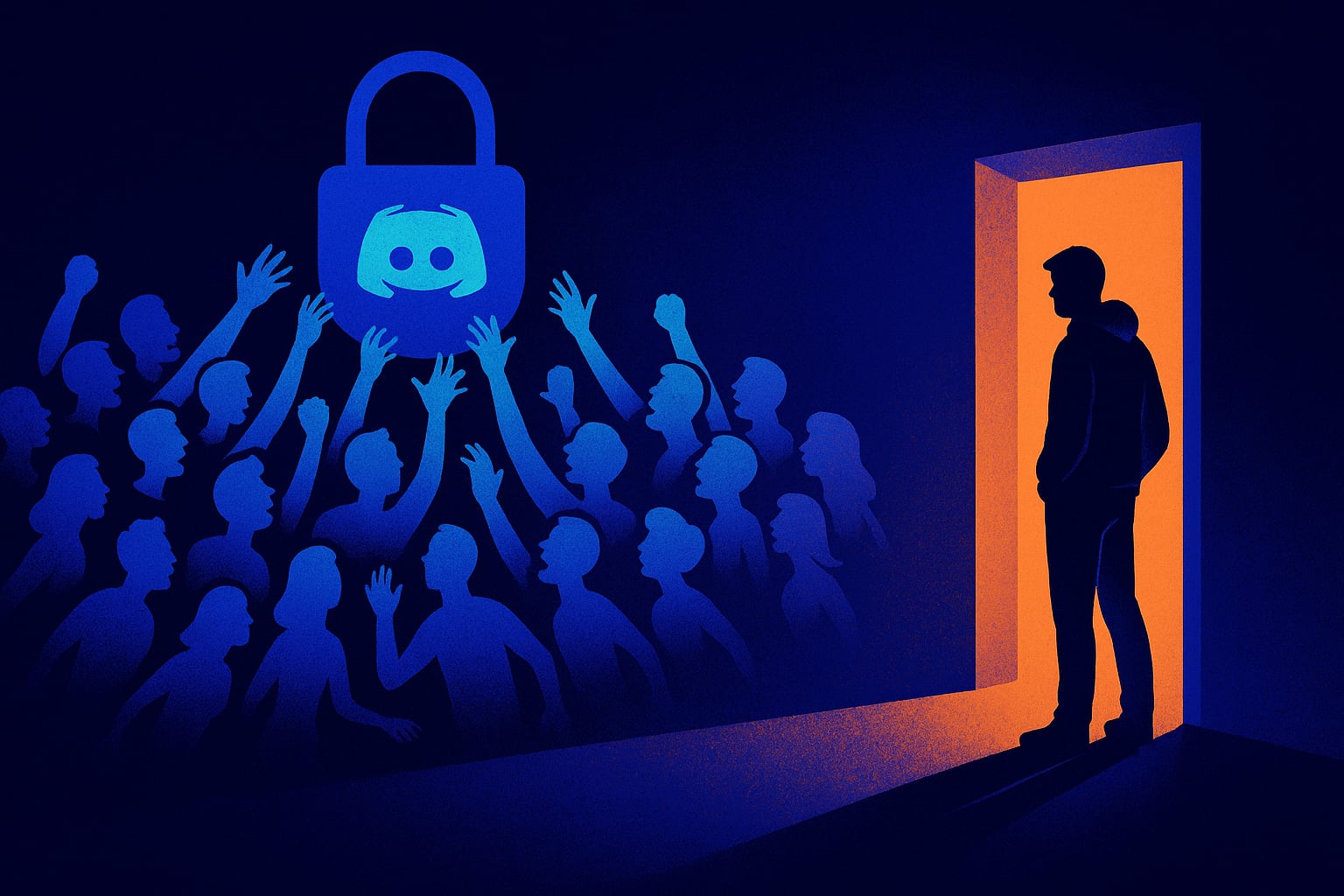
Restricting access created hype that the server itself couldn't live up to. The real problem wasn't getting people in. It was having nothing worth staying for.
The weekend I accidentally made my server feel important
My Discord server for my indie game had 90-something members and about four people who actually talked. I was exhausted from trying to spark conversations, so on a Friday I just... closed the invite link. Not permanently. I told myself it was because I wanted to clean up the channels over the weekend before letting more people in.
Then something weird happened. A few people who'd seen the old link tried to share it and it stopped working. Someone posted in my game's subreddit asking why the Discord was closed. Then someone else replied asking the same thing. By Sunday morning I had 23 DMs from people who wanted in.
Twenty-three people. More demand than I'd seen in two months of having the server open. I felt like I'd cracked some secret. I reopened the invite Monday morning, personally let everyone in, and watched the member count jump from 94 to 117 in about four hours.
By Tuesday night, 19 of those 23 new members had gone completely silent. Two had already left. One sent me a DM saying it 'wasn't really what they expected.' I sat there staring at my member list thinking I had somehow broken the one thing that was working.
What the disappearing members actually told me
Here's the part that took me a while to understand. The scarcity worked. The demand was real. Those 23 people genuinely wanted access to something. The problem was that 'something' didn't exist yet. They wanted the version of my server they had imagined, not the six half-empty channels and a bot that posted game updates nobody reacted to.
I had built the equivalent of a restaurant with a queue out the door and nothing on the menu. The hype was a loan I hadn't earned yet.
I spent the next week actually fixing the server instead of managing access to it. I used BuildMyDiscord to rebuild the channel structure from scratch, because honestly I had no idea how to make it feel like a place worth staying in rather than a place worth getting into. The difference sounds subtle but it's everything. A server worth getting into is about ego. A server worth staying in is about the other people there.
The specific changes that actually moved retention: I cut the channel count from 14 to 6. I added a proper onboarding flow that gave new members one specific thing to do in the first 90 seconds. I stopped posting 'game update' announcements and started posting questions that only someone who played the game would have an opinion on. That last one sounds small. It is not small.
The server now sits at 160 members with about 30 to 40 people active on any given day. I never did another invite-only weekend. I didn't need to. When the inside of the server is worth something, you don't have to manufacture urgency at the door.
The thing nobody says about Discord exclusivity
Every piece of advice about building a Discord community talks about getting members. Very little of it talks about what happens in the first 48 hours after someone joins, which is actually where you win or lose them.
Exclusivity can create a moment of attention. But attention has a very short shelf life. If the first thing someone sees after finally getting in is a #rules channel and three announcements from four months ago, the hype you built evaporates in about 60 seconds. I know because I watched it happen 19 times in one week.
The real question isn't 'how do I get more people to want to join?' It's 'what does a new member do in the first two minutes?' If you don't have a clear answer to that second question, no amount of demand at the door will save you. Fix the inside first. The outside takes care of itself.
Frequently Asked Questions
It can create short-term demand, but if the server experience isn't ready for new members, the hype disappears fast. Most people who join because of scarcity leave within 48 hours if there's nothing engaging to do once they're in.
Usually because there's no clear first action for them to take. If a new member lands in a #rules channel with no prompt to engage, the default behavior is to lurk or leave. A short onboarding flow with one specific thing to do in the first 90 seconds makes a real difference.
Fewer than you think. Servers under 200 members almost always do better with 5 to 8 focused channels than with 15 to 20 specialized ones. Empty channels signal a dead server. Fewer channels means more conversation in each one.
Ask questions that only your specific audience can answer, not general 'introduce yourself' prompts. For a gaming server, that means questions about the game. Specific questions get specific answers, and specific answers start real conversations.
Build yours in about 3 minutes
Stop wiring up channels by hand. Describe it, and it builds itself.
Tell the AI what your community is for and get a full Discord server back, channels, roles, permissions and a management bot, ready before your coffee is.
Build my server freeRelated articles
I copied my Discord server layout from a 'perfect template' I found online. My members hated every single channel.
I built my Discord server from a viral template and watched it fail in real time. Here's what the template got completely wrong.
I let my Discord members request new channels whenever they wanted. Within a week I had 34 channels and zero conversations.
Giving members channel-request power sounds democratic. It quietly destroys the one thing that makes people talk: nowhere else to go.
I let my Discord members DM me directly when they had problems. It broke me in 48 hours.
Opening your DMs to Discord members sounds community-friendly. Here's why it quietly destroys your server and your sanity.